Open 24 X 7 | drrajeshranjan447@gmail.com

Weak urine flow, waking up at night to urinate, or a feeling that the bladder never empties are common signs of an enlarged prostate (BPH) in men over 50. Dr. Kumar Rajesh Ranjan, M.Ch (Urology), treats BPH with medicines, HoLEP laser prostate surgery and TURP at Satyadev Super Speciality Hospital, Patna, choosing the least invasive option that gives lasting relief.
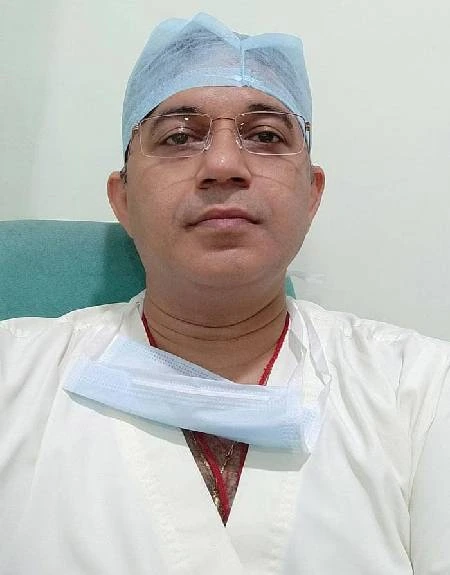
Benign prostatic hyperplasia (BPH) is first treated with lifestyle changes and medicines (alpha-blockers, and 5-alpha reductase inhibitors for larger glands). Surgery is advised when medicines stop working or complications such as urinary retention, bladder stones, repeated infections, bleeding or kidney damage develop. The two main operations are HoLEP (holmium laser enucleation of the prostate), suitable for any prostate size with very low bleeding, and TURP (transurethral resection of the prostate), best for small and medium glands — both done through the urine passage with no cuts. In Patna they are performed by M.Ch urologist Dr. Kumar Rajesh Ranjan at Satyadev Super Speciality Hospital.

The prostate is a small gland below the bladder that surrounds the urethra, the tube that carries urine out of the body. With age, the prostate slowly grows. This non-cancerous growth is called benign prostatic hyperplasia (BPH), and it affects a large share of men after 50.
As the gland enlarges it squeezes the urethra, so the bladder has to push harder to empty. Over time this causes a weak stream, frequent urination and, in some men, complete blockage (urinary retention), bladder stones, repeated infections or kidney damage.
BPH is not prostate cancer, and having BPH does not mean you will get cancer. Both can cause similar symptoms, so Dr. Ranjan checks for cancer with a PSA blood test and examination before planning treatment. If cancer is suspected, see our urological oncology page.

Prostate symptoms usually start slowly. See a urologist if any of these affect your sleep or daily life, and come to hospital at once if you cannot pass urine.
The stream is thin, starts and stops, or takes a long time to begin. Many men need to strain to pass urine.
Getting up two or more times a night (nocturia) is one of the most common reasons men with BPH visit a urologist.
A sudden, strong urge to urinate and needing to go every hour or two during the day.
Dribbling after urinating and a feeling that urine is still left behind. Leftover urine raises the risk of infection and bladder stones.
⚠ Needs evaluationAn enlarged prostate can bleed or cause repeated urine infections. Blood in urine should always be checked to rule out stones or cancer.
⚠ See a urologist soonSudden, painful inability to urinate (acute urinary retention) is an emergency. A catheter is needed to drain the bladder. Call +91-8050295197.
🚨 Emergency — call immediatelyA few simple tests show how large the prostate is, how badly it is blocking urine flow, and whether anything else needs attention. Most are done at the first visit.
A short questionnaire that scores your symptoms from mild to severe and helps track improvement after treatment.
Measures prostate size in grams, urine left in the bladder after voiding (PVR), and checks the kidneys and bladder for stones.
You pass urine into a special machine that measures the speed of your stream. A low flow rate confirms a blockage.
Prostate-specific antigen helps screen for prostate cancer before deciding on BPH treatment.
Urine routine and culture check for infection or blood. Creatinine shows whether the blockage has affected the kidneys.
A gentle examination by the urologist assesses the size and feel of the prostate.
Not every enlarged prostate needs surgery. Treatment depends on how much the symptoms bother you, the size of the prostate, and whether complications have developed.
For mild symptoms
First-line for moderate symptoms
Holmium Laser Enucleation of the Prostate
Transurethral Resection of the Prostate
Medicines are no longer enough
When PSA or examination is abnormal
Both HoLEP and TURP are done through the urine passage with no cuts on the body. Open surgery is now rarely needed. Here is how the options compare in general; your own plan depends on your prostate size, health and other conditions.
| Feature | HoLEP (Laser) | TURP | Open Prostatectomy |
|---|---|---|---|
| Access | Through urethra — no cuts | Through urethra — no cuts | Incision in the lower abdomen |
| Prostate Size | Any size, including very large | Small to medium | Very large glands |
| Bleeding | Very low | Low to moderate | Higher; transfusion more likely |
| Catheter | Usually 1-2 days | Usually 2-3 days | About a week |
| Hospital Stay | 1-2 days | 2-3 days | 5-7 days |
| Chance of Repeat Surgery | Very low | Low, rises over many years | Very low |
| Blood Thinners | Often manageable with planning | Usually must be stopped | Must be stopped |
A step-by-step guide to prostate surgery at Satyadev Hospital, from the first tests to going home.
Ultrasound, PSA, urine culture, blood tests, ECG and an anaesthesia check. Any urine infection is treated first, and blood thinners are planned with your physician.
Before surgerySpinal anaesthesia (numb from the waist down) or general anaesthesia, so you feel no pain during the operation.
10-15 minutesA thin telescope is passed through the natural urine passage to view the prostate and bladder on a screen. No cut is made on the skin.
First few minutesIn HoLEP, the holmium laser separates the enlarged inner prostate from its capsule and the tissue is removed from the bladder. In TURP, an electric loop trims the tissue in small pieces. The tissue is sent for testing.
About 1-2 hours, depending on sizeA urinary catheter rinses the bladder for a short time. Once the urine is clear and the catheter is removed, you pass urine normally and go home.
Usually home in 1-3 days
Most men are surprised by how quickly urine flow improves. Here is what a typical recovery looks like.
Catheter in place with bladder rinsing. Walking the same or next day. Catheter usually removed in 1-3 days.
Stronger stream straight away. Some burning, urgency and a little blood in urine are normal. Drink plenty of water.
Return to desk work and light activity. Urgency settles steadily. Avoid straining and heavy lifting.
Follow-up visit with flow test. Most men return to normal activity, including driving and sex.
Healing is complete. Night-time urination and urgency are usually much better than before surgery.
These signs can mean complete blockage, infection or bleeding, either before or after prostate surgery. Call +91-8050295197 and come to Satyadev Hospital.
A painful, full bladder with little or no urine needs a catheter urgently.
Dark red urine with clots that block the flow needs prompt bladder washout.
May mean a urine or prostate infection that needs antibiotics, sometimes in hospital.
Constant pain above the pubic bone with a swollen bladder suggests retention.
Low urine output with swelling or breathlessness can mean the kidneys are affected.
Signs of a serious blood infection (urosepsis) — a life-threatening emergency.
Prostate surgery results depend on the surgeon's training and the equipment available. Here is what you get at Satyadev Urology.
MBBS, MS, M.Ch (Urology), FMAS, with fellowship training in advanced laparoscopic urology at Urocare, Kochi and Aesculap Academy, Germany.
Holmium laser, endourology instruments and modular operation theatres at Satyadev Hospital for HoLEP and laser stone surgery.
Recipient of the Stars of Bihar Award, the Acharya Charak Medical Award and Icon of Health, Bihar.
24×7 ICU, anaesthesia and critical care team for older men with heart, kidney or diabetes problems.
Prostate surgery is available under Ayushman Bharat PMJAY and major insurance for eligible patients.
Ultrasound, uroflowmetry, lab tests, surgery and follow-up in one hospital in Patna.
The cost of HoLEP or TURP in Patna depends on the size of the prostate, the type of surgery, the number of days in hospital, your room category, and any other health conditions that need care. After your tests, our team gives you a clear written estimate before surgery.
Eligible patients can have prostate surgery cashless or free under Ayushman Bharat PMJAY, and Satyadev Hospital is on the panel of CGHS, ESIC and most major insurance companies and TPAs. See the full insurance and TPA list. Consultation with Dr. Ranjan is ₹800 and is valid for 15 days.
11:00 AM – 3:00 PM, Monday to Saturday
3:00 PM – 4:00 PM, Monday to Saturday. Sunday OPD closed; emergency open 24×7.
Old prescriptions, ultrasound reports, PSA results and a list of your current medicines, especially blood thinners.
See Dr. Ranjan's full profile on the urologist in Patna page, or his doctor profile at Satyadev Hospital.
RIRS, PCNL and laser treatment for kidney stones of every size.
Bladder stones are a common result of BPH and are often removed during the same surgery.
Diagnosis and treatment of urological cancers.
Keyhole surgery for large and staghorn kidney stones.
Male sexual health and infertility care.
Surgery for scrotal swelling caused by fluid collection.
"One of the best doctors for kidney problems in Patna. All advanced procedures like PCNL, URS, laparoscopic nephrectomy done here. Clean and hygienic."
Rajan Sharma"Mere patient ko urine bladder stone tha. Ayushman Card se Satyadev Multi Speciality Hospital Patna mein Cystolithotripsy surgery hui. Treatment bahut safal raha aur patient ab theek hai."
Mukesh Singh"Good service, friendly environment, caring staff. Excellent services — I will recommend this hospital."
Dharmender MahatoAnswered by the urology team at Satyadev Hospital, Patna.
Dr. Kumar Rajesh Ranjan, M.Ch (Urology), is a senior urologist at Satyadev Super Speciality Hospital, Patna, with 15+ years of experience. He performs HoLEP laser prostate surgery and TURP and has received the Stars of Bihar and Acharya Charak awards.
HoLEP (Holmium Laser Enucleation of the Prostate) uses a holmium laser, passed through the urine passage, to remove the enlarged part of the prostate that blocks urine flow. There are no cuts on the body, bleeding is very low, and it works for prostates of any size.
Both are effective. HoLEP is usually preferred for large prostates and for men on blood thinners because it causes less bleeding and has a very low chance of repeat surgery. TURP works well for small and medium prostates. Dr. Ranjan recommends the option that suits your prostate size and health.
Yes. Mild to moderate symptoms are often controlled with medicines and lifestyle changes. Surgery is advised when medicines stop working or when complications such as urine retention, bladder stones, repeated infections, bleeding or kidney damage develop.
Most patients go home in 1-2 days after HoLEP and 2-3 days after TURP, once the catheter is removed and they can pass urine normally.
Erections are usually not affected. Most men have retrograde ejaculation afterwards, meaning semen goes into the bladder instead of coming out. This is harmless but can affect fertility, so discuss it with Dr. Ranjan before surgery.
हाँ। सत्यदेव सुपर स्पेशलिटी हॉस्पिटल, पटना आयुष्मान भारत (PMJAY) से जुड़ा है। योग्य मरीजों का प्रोस्टेट ऑपरेशन (HoLEP या TURP) आयुष्मान कार्ड से कैशलेस हो सकता है। अपनी पात्रता जानने के लिए 8050295197 पर कॉल करें।
पेशाब की धार कमजोर होना, रात में बार-बार पेशाब के लिए उठना, पेशाब रोक न पाना, पेशाब पूरा न होने का एहसास और पेशाब में रुकावट इसके आम लक्षण हैं। अगर पेशाब बिल्कुल बंद हो जाए तो तुरंत अस्पताल आएँ।
Call +91-8050295197 or +91-8235152796, or use our contact page. New patients are seen from 11:00 AM to 3:00 PM, Monday to Saturday, at Satyadev Super Speciality Hospital, Magistrate Colony, Khajpura, Patna.
Trusted by patients across Bihar for HoLEP laser and TURP prostate surgery. Call now or visit us at Magistrate Colony, Khajpura, Patna.
Book an Appointment