Open 24 X 7 | drrajeshranjan447@gmail.com

Kidney stones are one of the most common and most painful urological conditions — and one of the most treatable. Dr. Kumar Rajesh Ranjan, M.Ch (Urology), has performed 1,000+ kidney stone procedures using PCNL, Mini-PCNL, RIRS (laser), and shockwave therapy at Satyadev Super Speciality Hospital, Patna, offering the least invasive effective option for every stone.
Kidney stones differ by what they're made of and where they sit — both affect the best treatment approach. Our team evaluates each case individually.
The most common stone type
Linked to diet and metabolism
Forms due to urinary tract infection
Rare, genetic condition
Large stones filling the kidney's collecting system
Stones under 5-6mm
Know the signs of kidney stones — and especially the emergency warning signs that need immediate hospital care.
Sharp, cramping pain in the side or back, below the ribs, that may radiate to the lower abdomen and groin — the classic sign of a moving stone.
Pink, red, or brown-tinged urine as the stone irritates the urinary tract lining while passing.
Very common alongside stone pain due to shared nerve pathways between the kidneys and gut.
⚠ Common with acute painBurning sensation and frequent urge to urinate, especially as a stone nears the bladder.
Fever combined with flank pain may mean the stone has caused a blocked, infected kidney — a surgical emergency. Call +91-8050295197 immediately.
🚨 Emergency — call immediatelyA large stone blocking both ureters (or the only functioning kidney) is rare but a true emergency requiring immediate intervention.
🚨 Emergency — call immediatelyNot every stone needs the same procedure. Dr. Ranjan selects the technique based on your stone's size, location, and composition — here's how the main options compare.
| Feature | RIRS / Laser (Flexible Scope) | PCNL / Mini-PCNL | Open Surgery |
|---|---|---|---|
| Access | Natural urinary passage — no cuts | Small tract (5-15mm) in the back | Large open incision |
| Best For | Stones up to ~2cm | Larger & staghorn stones | Very complex, rare cases |
| Hospital Stay | Same day / overnight | 1-2 nights | 5-7 days |
| Pain After | Minimal | Mild-moderate | Significant |
| Scarring | None | One small scar | Large visible scar |
| Return to Work | 3-5 days | 5-7 days | 3-4 weeks |
| Stone Clearance | High for <2cm stones | Very high, even for large stones | High, but far more invasive |
A step-by-step guide to PCNL/RIRS kidney stone treatment at Satyadev Hospital — from preparation to going home.
CT scan or ultrasound confirms stone size, number, and location. Blood tests and urine culture check for infection. This determines whether RIRS, PCNL, or shockwave is the right approach.
Before surgeryGeneral or spinal anaesthesia is administered — you remain fully comfortable and asleep throughout the procedure.
10-15 minutesFor RIRS, a flexible scope passes through the natural urinary tract to reach the stone. For PCNL, a small tract (5-15mm) is created directly into the kidney under X-ray/ultrasound guidance.
First 10-15 minutesThe stone is broken into small fragments using a laser and removed or allowed to pass naturally as fine dust/fragments, under continuous camera visualization.
30-90 minutesA temporary internal stent may be placed to help urine flow while the tract heals — removed in a quick outpatient visit within 1-2 weeks. Most patients walk within hours and go home the same day or next morning.
Same day / next morning discharge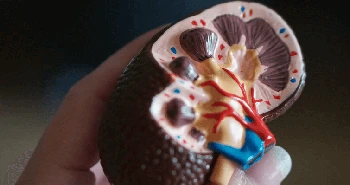
Most patients recover faster than they expect after PCNL/RIRS. Here is what to expect at each stage.
Procedure done. Walking within 2-4 hours. Discharged same evening or next morning with oral pain tablets.
Rest at home. Mild burning while urinating (if stent placed) is normal. Drink plenty of water.
Gradually increase activity. Return to desk/office work by day 5-7.
Stent removal visit (if placed) — a quick outpatient procedure. Near-normal daily activities.
Return to full physical activity including gym and heavy lifting. Follow-up scan to confirm complete stone clearance.
These symptoms indicate an obstructed, infected kidney (urosepsis) or post-operative emergency — call +91-8050295197 immediately and come to our hospital.
Fever above 38.5°C combined with stone pain suggests an infected, obstructed kidney — needs urgent drainage and antibiotics.
Inability to pass urine for several hours can indicate complete blockage of both kidneys — a surgical emergency.
Inability to keep fluids down alongside severe pain needs urgent evaluation to rule out complete obstruction.
Bright red urine with clots, rather than a light pink tinge, needs prompt assessment.
Severe pain not responding to prescribed pain medication needs urgent reassessment.
Signs of urosepsis (blood infection from an obstructed kidney) — a life-threatening emergency requiring immediate hospital care.
Patients from across Bihar choose Satyadev Hospital for kidney stone treatment. Here is why.
Dr. Ranjan has performed over 1,000 kidney stone surgeries — PCNL, Mini-PCNL, RIRS, and laser lithotripsy.
Most RIRS and many PCNL procedures result in same-day or next-morning discharge.
Kidney stone surgery is covered under Ayushman Bharat PMJAY at Satyadev Hospital for eligible patients. Call 8050295197 to check.
Shockwave, RIRS/laser, Mini-PCNL, and PCNL are all available — the right technique is chosen for your specific stone.
Obstructed, infected kidneys are surgical emergencies — managed immediately with our 24×7 OT and surgical team.
1,014+ verified Google reviews — consistently rated one of the most trusted hospitals in Patna for stone surgery.
"Best hospital, Satyadev. My relative's PCNL kidney stone operation was completely free under the PMJY card. Discharged today, fully recovered."
Anil Ram"One of the best doctors for kidney problems in Patna. All advanced procedures like PCNL, URS, laparoscopic nephrectomy done here. Clean and hygienic."
Rajan Sharma"Good service, friendly environment, caring staff. Excellent services — I will recommend this hospital for kidney stone treatment."
Dharmender MahatoAnswered by our surgical team at Satyadev Hospital, Patna.
Dr. Kumar Rajesh Ranjan, senior consultant urologist at Satyadev Super Speciality Hospital, has performed over 1,000 kidney stone procedures using PCNL, Mini-PCNL, RIRS, and laser lithotripsy, and is widely recognized as one of the best kidney stone surgeons in Patna.
RIRS uses a flexible scope passed through the natural urinary passage — no cuts at all — and is best for stones up to about 2cm. PCNL creates a small tract directly into the kidney and is used for larger or staghorn stones. Dr. Ranjan will recommend the right option based on your stone's size and location.
Stones under about 5-6mm often pass naturally with hydration and medication. Larger stones, or stones causing persistent pain or blockage, typically need PCNL, RIRS, or laser treatment.
Yes. Satyadev Super Speciality Hospital is empanelled under Ayushman Bharat (PMJY) and other major insurance schemes, offering cashless treatment for eligible patients.
Most patients go home the same day or next morning and return to light work within 5-7 days. If a stent was placed, it is removed in 1-2 weeks, with full recovery by 3-4 weeks.
Call +91-8050295197 or +91-8235152796, or visit our contact page to book an appointment at Satyadev Super Speciality Hospital, Magistrate Colony, Khajpura, Patna.
Trusted by patients across Bihar for PCNL, RIRS, and laser kidney stone treatment. Call now or visit us at Magistrate Colony, Khajpura, Patna.
Book an Appointment