Open 24 X 7 | drrajeshranjan447@gmail.com

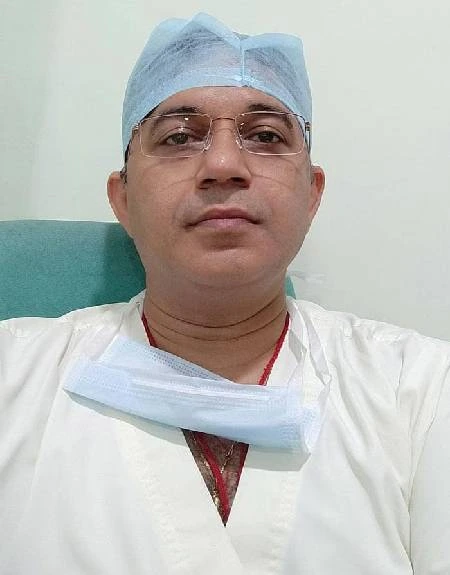
Kidney failure — whether sudden (acute) or long-term (chronic) — needs prompt, expert treatment. Dr. Kumar Rajesh Ranjan and the team at Satyadev Super Speciality Hospital provide complete kidney failure care in Patna: emergency management, hemodialysis, peritoneal dialysis, and transplant-related support, all under one roof with 24×7 availability.
Kidney failure is classified by how quickly it develops and where the underlying problem lies — this determines the urgency and type of treatment needed.
Sudden loss of kidney function over hours to days
Reduced blood flow to otherwise healthy kidneys
Blockage downstream of the kidneys
End-stage of long-term chronic kidney disease
These are the signs of established kidney failure, once the kidneys can no longer keep up with the body's needs — more advanced than early CKD symptoms.
Passing noticeably less urine than usual, or none at all, over several hours.
Marked swelling in the legs, ankles, or around the eyes as the kidneys stop removing excess fluid.
Profound tiredness as waste products and toxins build up in the blood.
Ongoing nausea, vomiting, and loss of appetite from toxin build-up (uraemia).
⚠ Needs prompt evaluationShortness of breath from fluid build-up around the lungs — a sign treatment is needed urgently.
🚨 Emergency — call immediatelyA build-up of toxins affecting the brain — a sign that dialysis may be needed without delay.
🚨 Emergency — call immediatelyOnce kidney failure is confirmed, there are several treatment paths depending on the cause, your overall health, and your preferences. Here's how the main options for managing kidney failure compare. (Looking for the transplant comparison instead? See our nephrology care page.)
| Feature | Hemodialysis | Peritoneal Dialysis | Conservative Management |
|---|---|---|---|
| How It Works | Blood filtered by a machine at a dialysis centre | Fluid exchange inside the abdomen, often done at home | Medication and diet, without dialysis |
| Frequency | Usually 3 sessions/week, ~4 hours each | Daily exchanges, done at home | Ongoing outpatient management |
| Location | At our dialysis centre | Mostly at home, after training | Managed via regular clinic visits |
| Lifestyle Impact | Schedule built around sessions | More flexible day-to-day | Fewest treatment-related restrictions |
| Best Suited For | Most patients; strong support at our centre | Patients wanting home-based treatment | Select patients where dialysis isn't appropriate or desired |
A step-by-step guide to beginning dialysis treatment at Satyadev Hospital, from assessment to your ongoing routine.
Blood tests confirm the level of kidney failure. Dr. Ranjan discusses which type of dialysis (or conservative management) best fits your situation.
First visit(s)For hemodialysis, a vascular access (AV fistula or, in urgent cases, a temporary catheter) is created to allow safe, repeated blood filtering.
Days to a few weeks before starting (urgent cases faster)Your first session is closely monitored by our nephrology and nursing team, with a shorter duration to help your body adjust.
2-3 hours (shorter than routine sessions)Sessions settle into a regular schedule (typically 3x/week for hemodialysis), with dose and timing fine-tuned based on your blood results.
First 2-4 weeksRegular blood tests, diet/fluid guidance, and access-site care become part of routine life, with Dr. Ranjan and the team monitoring for any need to adjust your plan — including transplant candidacy over time.
Ongoing
Most patients feel noticeably better once treatment begins and toxin levels come down. Here's a general idea of what adjustment looks like.
First sessions. Some fatigue and access-site tenderness is common as your body adjusts.
Energy typically improves as toxin levels normalize. Diet and fluid targets are fine-tuned.
Routine becomes familiar. Access site fully healed (for AV fistula). Most patients resume many normal activities.
Regular monitoring continues. Transplant candidacy reviewed periodically if desired.
These symptoms can indicate a dangerous complication of kidney failure — call +91-8050295197 immediately and come to our hospital.
Sudden shortness of breath, especially when lying flat, can indicate dangerous fluid overload around the lungs.
Can indicate dangerously high potassium (hyperkalaemia) — a life-threatening complication requiring urgent dialysis.
Uncontrolled bleeding from a fistula or catheter site needs immediate pressure and hospital assessment.
May indicate an infected dialysis access, a serious complication requiring urgent treatment.
Can indicate a dangerous build-up of toxins requiring urgent dialysis.
Complete absence of urine output over 12-24 hours needs urgent evaluation.
Patients from across Bihar choose Satyadev Hospital for kidney failure and dialysis care. Here is why.
No need to travel between facilities — nephrology consultation, dialysis, and emergency care are all on site. See our dialysis centre page for facility details.
Whether it's sudden kidney failure needing urgent treatment, or long-term ESRD management, our team handles both.
Kidney failure treatment and dialysis are covered under Ayushman Bharat PMJAY for eligible patients. Call 8050295197 to check.
For patients progressing toward transplant, Dr. Ranjan brings 120+ kidney transplant procedures of hands-on experience.
Kidney failure complications are managed immediately with our 24×7 dialysis and emergency team.
1,014+ verified Google reviews — consistently rated one of the most trusted hospitals in Patna for kidney care.
"Good service, friendly environment, caring staff nature, excellent dialysis services. I will recommend this hospital for better care and healing."
Dharmender Mahato"Dr. Kumar Rajesh Ranjan sir is best Doctor in Patna Bihar for urology and kidney care. Thank you so much for the treatment — Ayushman Bharat card se hua hai free ilaz."
Md Mustaak Ahmad"One of the best doctors for kidney problems in Patna. Clean and hygienic hospital with dedicated, caring staff."
Rajan SharmaAnswered by our nephrology team at Satyadev Hospital, Patna.
Acute kidney failure (AKI) develops suddenly, over hours to days, and is often reversible if treated promptly. Chronic kidney failure (ESRD) is the end stage of long-term chronic kidney disease and generally requires ongoing dialysis or transplant. See our CKD staging guide for how chronic kidney disease progresses.
The decision is based on your kidney function (eGFR), symptoms, and blood test results (particularly potassium and toxin levels). Dr. Ranjan will discuss this with you clearly if your kidney failure reaches a stage where dialysis is medically appropriate.
Neither is universally "better" — the right choice depends on your health, lifestyle, and home support. Hemodialysis is done at our centre a few times a week; peritoneal dialysis can often be done at home daily. Dr. Ranjan will help you choose the best fit.
Yes. We have an in-house dialysis centre with 24×7 emergency support for both urgent and routine dialysis sessions.
Yes. Satyadev Super Speciality Hospital is empanelled under Ayushman Bharat (PMJY) and other major insurance schemes, offering cashless kidney failure treatment and dialysis for eligible patients.
Call +91-8050295197 or +91-8235152796, or visit our contact page to book an appointment at Satyadev Super Speciality Hospital, Magistrate Colony, Khajpura, Patna.
Trusted by patients across Bihar for acute and chronic kidney failure care, dialysis, and transplant support. Call now or visit us at Magistrate Colony, Khajpura, Patna.
Book an Appointment